
Donald Trump says several issues were settled during the final day of talks with Xi Jinping covering trade, tariffs, and diplomacy.

Communication channels between India and the US are open to resolve the ongoing tariff issues, and the glitch in trade ties is only temporary, given the long-term relationship between the two nations, government sources said on Wednesday. The US' 50 per cent tariffs on Indian exports to America came into effect from August 27, barring a few sectors.

India's EV ecosystem is growing, but remains too underdeveloped to cushion a major oil supply shock.

The Indian government is set to accelerate reforms, including measures to enhance foreign direct investment, speed up divestment, and boost asset monetisation, to maintain economic growth despite rising fuel and fertiliser import costs driven by the West Asia crisis.
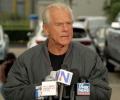
Ahead of trade talks between Indian and United States officials in Delhi, White House trade advisor Peter Navarro said India, which has the 'highest tariffs' of any major country, is 'coming to the table'.

India will maintain multiple sources for crude oil purchases and diversify them to ensure stability in the supply chain with national interests remaining the "guiding factor" for the procurement, Foreign Secretary Vikram Misri said.

The Confederation of Indian Industry (CII) has proposed a 20-point policy agenda to the finance ministry, including a conflict-linked emergency credit line guarantee scheme and tax rationalisation on energy inputs, to support MSMEs, exporters, and energy-intensive industries affected by the ongoing West Asia war.

'The West Asia or the Gulf crisis has shown that what we develop as national infrastructure when things are not as bad as they could be, we forget to plan for adversities.'

India's first trillion-dollar company will be built on technology it owns, not just operates, predicts Ajay Kumar.

The statement did not name any country. But the US has often blamed India and China for purchasing Russian oil even when there are no tariffs on Beijing for it.

The US-China rapprochement, however tenuous, is not without implications for India. Both China and Pakistan have become closer to the US, notes Ambassador T P Sreenivasan.
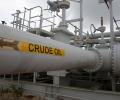
India will restrict crude oil purchases from Russia as part of an agreement reached with the US in exchange for lower trade tariffs, sources said, adding imports will continue for now by refiners such as Nayara Energy, which have no other alternative source. US President Donald Trump announced overnight that the United States will cut the reciprocal tariff on imports of Indian goods to 18 per cent from 25 per cent under a broader bilateral understanding.

Insights from behavioural economics suggest that an ambitious nudge can be effective if three conditions are met, points out Ram Singh Insights from behavioural economics suggest that an ambitious nudge can be effective if three conditions are met, points out Ram Singh, director, Delhi School of Economics.
Uncertainties stemming from the West Asia crisis and its potential impact on inflation and economic growth were key factors in the Reserve Bank of India's Monetary Policy Committee (MPC) decision to maintain the status quo on interest rates, according to the recently released MPC meeting minutes.

Vance also hinted that the US may drop additional tariffs on countries if the US make a deal with Russia, and also apply more tariffs on the countries to bring this war to a close.

Chinese President Xi Jinping warned US President Donald Trump that mishandling the Taiwan issue could trigger conflicts between the two countries during wide-ranging talks on trade, Iran, and energy security.
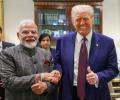
Trump announced that India and the US agreed to a trade deal under which Washington will charge a reduced reciprocal tariff on Delhi, lowering it from 25 per cent to 18 per cent.
The government on Wednesday put out the draft of a new policy that projects the country's power sector will need Rs 50 trillion in investments by 2032 and Rs 200 trillion by 2047, proposing ambitious reforms in generation, transmission and distribution.
Both countries commit to provide each other preferential market access in sectors of respective interest on a sustained basis

Investors should tilt their portfolios towards domestic-facing defensive sectors, which should help provide stability and shield them from geopolitical and tariff risks.
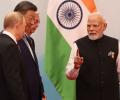
Russian Foreign Minister Sergei Lavrov on Thursday said the US threats of tariffs against India and China are failing and there is a growing understanding in Washington of the futility of talking in such language with two ancient civilisations.

New Delhi, while opting not to retaliate yet to the American tariffs, has in recent weeks sought to reinforce its friendship with Moscow, and recalibrate its ties with Beijing rather than surrender to Washington's diktats.

Lavrov said that the US has set itself the objective of 'achieving economic domination', adding further to it that Americans want to control the routes to leading countries to provide its energy sources to them.

US Energy Secretary Chris Wright said that long-term oil supplies are 'abundant' and there are no worries regarding that, but in the short term, there is a need to get oil on the market.
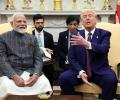
Prime Minister Narendra Modi and US President Donald Trump discussed the West Asia crisis and the importance of keeping the Strait of Hormuz open and secure. They also reviewed progress in bilateral ties and anticipated upcoming deals in the energy sector.

Despite recent share price dips, Bharti Airtel is strategically positioned for growth, driven by investments in data centres via Nxtra, a potential tariff hike, and strong performance in Africa, alongside efforts to deleverage and expand its subscriber base in underpenetrated rural markets.

Prime Minister Narendra Modi and Brazilian President Luiz Incio Lula da Silva agreed to enhance cooperation in trade, technology, energy, defence, agriculture, health, and people-to-people ties.

'FPIs are unlikely to return unless there is equilibrium between valuation premium and earnings growth.'
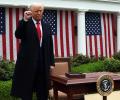
Here is a list of Q & As to explain these issues and implications of the US move.

After the US Supreme Court struck down President Donald Trump's global tariffs, Congress leader Rahul Gandhi accused Prime Minister Narendra Modi of being "compromised", saying his "betrayal" in the India-US interim trade deal stood exposed.
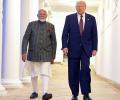
US President Donald Trump expresses frustration with the lack of progress in trade talks with India, imposing a 25% tariff. The move comes amid concerns over trade deficits and India's reliance on Russian military equipment and energy.

'In all these years of rupee depreciation, of rising oil prices, of inflation caused by import dependence, not one leader had the courage to look the people in the eye and say: Please do this for your country.'
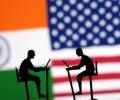
US President Donald Trump has announced a 25 per cent plus tariff on India from Aug 1. Trump, describing India as a "friend", said the US has done relatively "little business" with the country because of its high tariffs.

Greer said that India has taken down some digital services taxes and is moving tariffs down.
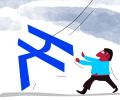
The Indian rupee depreciated by 52 paise to settle at 93.35 against the US dollar, driven by failed US-Iran peace talks, surging crude oil prices due to a potential US blockade of Iranian ports, and a global flight to the greenback. This geopolitical uncertainty is also leading to foreign capital withdrawal from domestic equities.

The statement comes even as Tehran links the issue to ongoing efforts to bring a complete end to hostilities in West Asia involving the United States and Israel.
India has clarified its position on the proposed interim trade agreement with the US, stating that the joint statement remains the basis for mutual understanding. Amendments to a White House fact sheet reflect shared understandings, with both sides working towards finalizing the agreement.
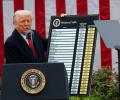
Amid the tumbling stock market in the United States, following the White House clarification of tariffs on China to be at least 145 per cent and an earlier announcement of a 90-day pause on tariffs for over 75 countries, President Donald Trump addressed the challenges associated with his tariff policy, stating that there would be 'transition problems'.

The US has granted India permission to buy Russian oil already in transit to ease global supply pressures amidst the West Asia conflict. This decision comes after India agreed to halt sanctioned Russian oil purchases and substitute them with US oil.
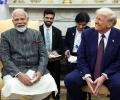
Congress general secretary Jairam Ramesh said Modi should take inspiration from former prime minister Indira Gandhi and stand up to the president of the United States.
